
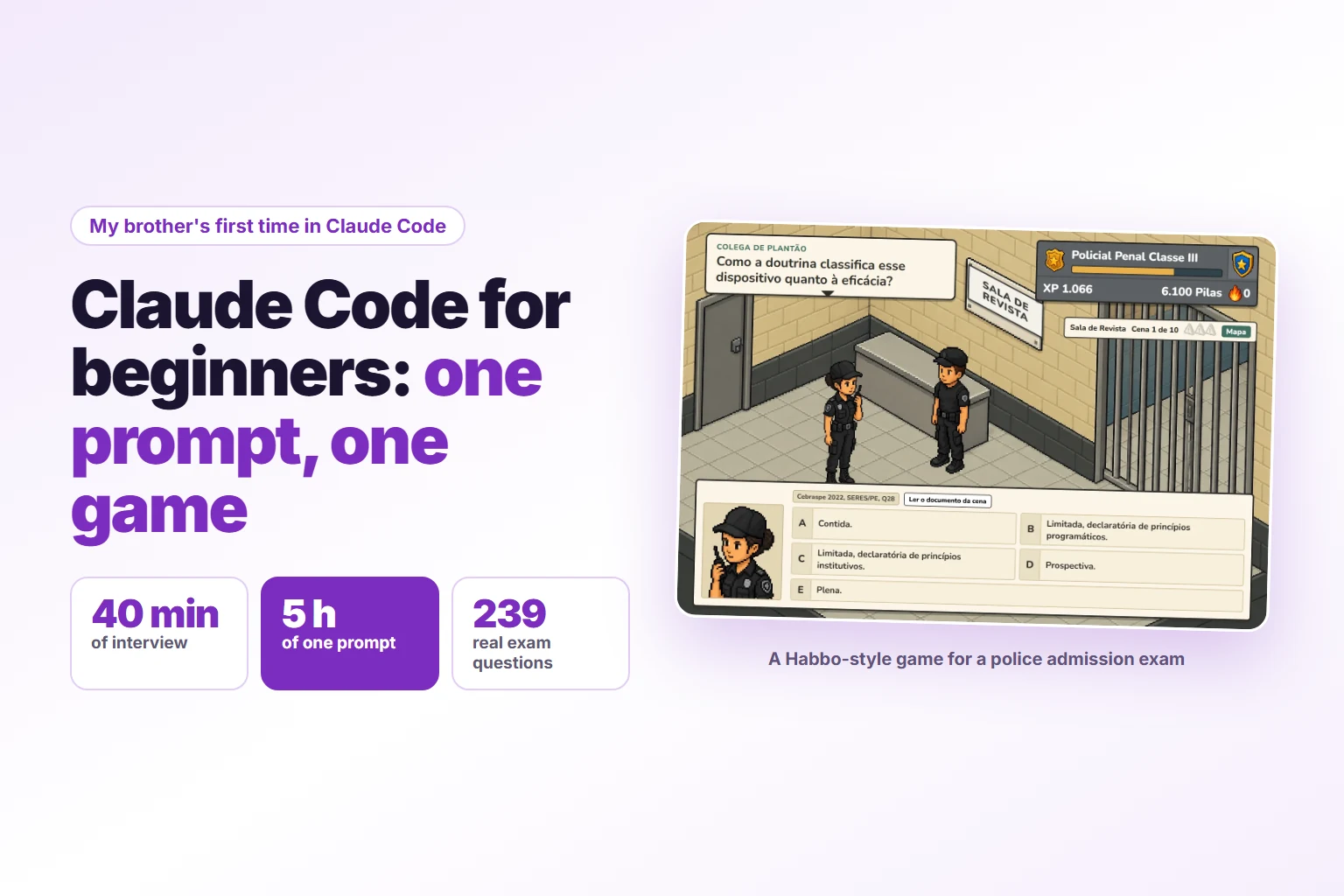
Key takeaways
- The non-coder’s job is not to code. It is to be the expert and the harshest critic in the room.
- Spend the time on the first prompt, not on the chat after it. 40 minutes of interview bought 5 hours of unattended building.
- Record them ranting. A garbled voice note beats a spec they were forced to write.
- Approve pictures before anyone approves code, because pictures are the only thing a beginner can review.
- Give the AI a source of truth it did not write, then make it check itself against that source every time.
- Auditor agents are the senior engineer the beginner does not have. They caught 8 answers that a 2026 law change had turned wrong.
Claude Code for beginners, the way I use it: the beginner never writes code. They spend 40 minutes being interviewed, which produces one detailed prompt, and then that prompt runs on its own for hours while agents build, check and audit the work against sources no AI wrote.
My brother is studying for the admission exam of a police force. 700 openings, a brutal exam, test expected in early 2027. He studies hours a day, and he already had a system that works: PDFs of old exams, a question bank, flashcards.
For context, it is the prison police of Pernambuco, a state in Brazil, and the exam is set by Cebraspe, an exam board famous for trick questions. So the game is in Portuguese, which is why the screenshots below are too.
On September 24 he was sitting next to me, telling me about his routine, and the rant ended with this:
“Let’s make a Minecraft game, then!”
It was his first time anywhere near Claude Code. He did not type a single command. I held the keyboard, he talked, and his words went into the session raw, through dictation. So this is Claude Code for beginners in the most literal sense: a first-timer who never wrote code and still decided every part of the product.
What did Claude say first? It told us not to build it. He already had a working setup, and a new app competes with the work that pays my bills. Its verdict: worth it as an afternoon project, nothing more.
We ignored it, obviously. The whole thing split into two phases: 40 minutes of interview to write one prompt, then 5 hours of that prompt running while we watched. By the end of the day the game was live, behind a password, on its own domain.
What you are building
This is the shape, so you can copy it for any subject your kid, your partner or your brother is studying:
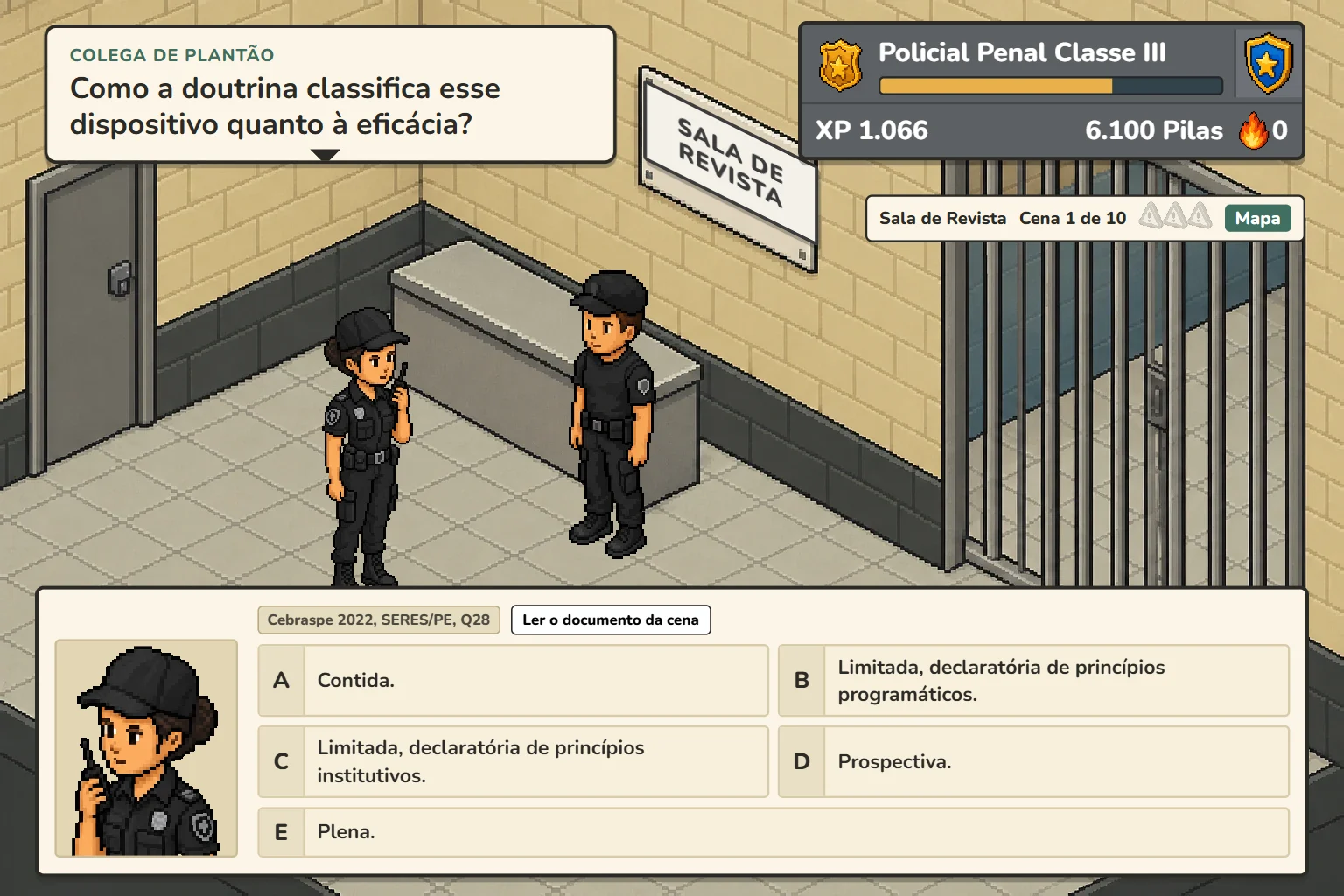
- A browser game in isometric pixel art, in the style of Habbo Hotel. Every room in the prison is one exam subject.
- Every scene is a real past exam question, rewritten as a situation inside a prison. A character walks in, says one or two lines, and you pick A to E.
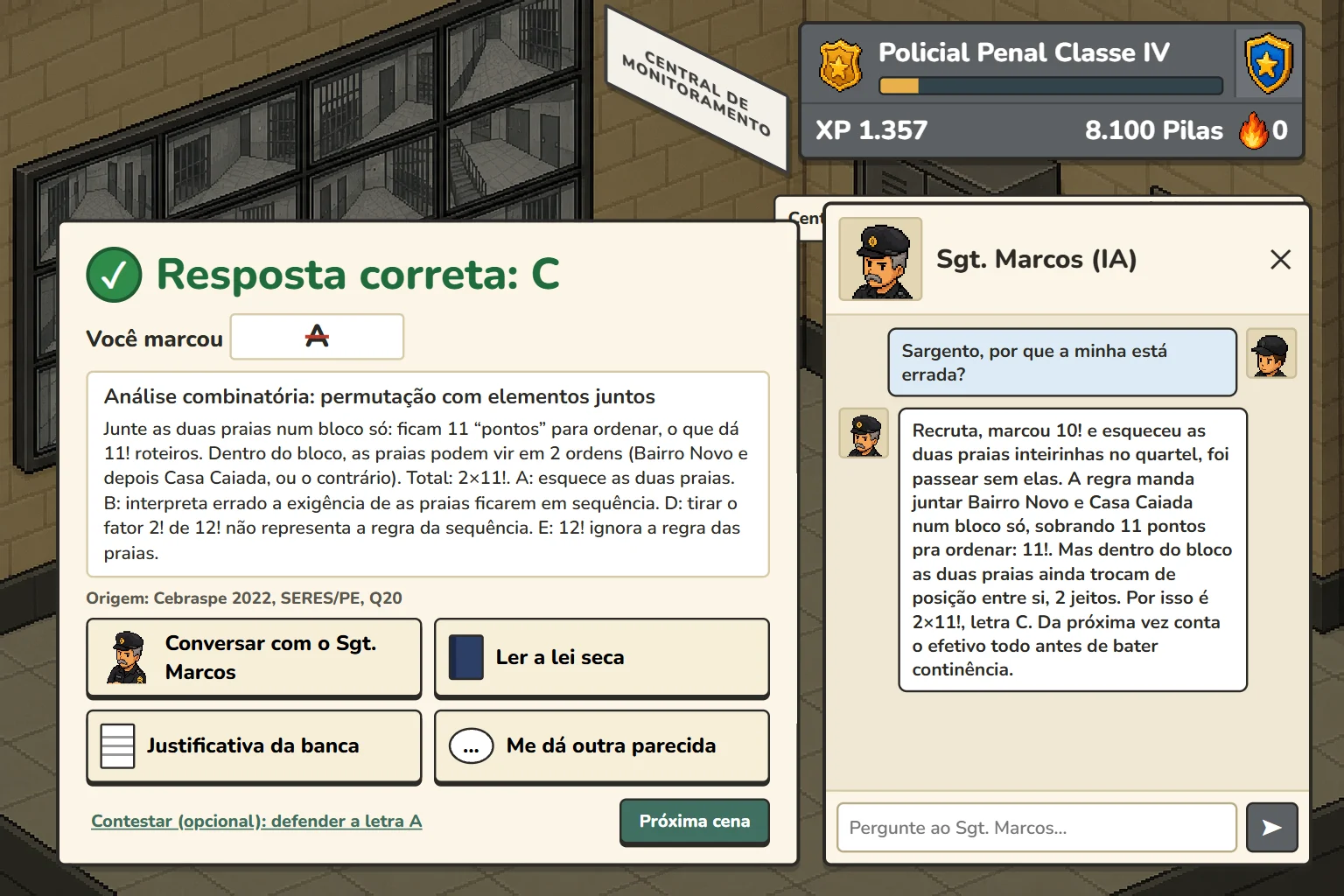
- Get it wrong and a card shows the right letter, the article of law, and which exam the question came from.
- A career ladder from Class I up, with fake salary, XP, and a disciplinary board that docks your pay for sloppy shifts.
- Spaced review at 1, 3, 7 and 15 days, a PDF importer for new exams, and a mock exam built from your own repeated mistakes.
By the numbers: 239 real exam scenes, 54 past exam PDFs as source, 40 minutes of interview plus 5 hours of one prompt, and $2.34 of AI spend inside the game.
Why not the normal way
The normal way is a quiz app. Every exam prep product I found is a quiz with a nicer font. A research agent went looking for anything like this game and came back with nothing: the closest references were Papers Please, Ace Attorney and iCivics, none of them for exams.
The other normal way is a beginner opening Claude Code alone, typing “make me a game”, and getting a pretty thing where half the answers are wrong. For a study tool that is worse than nothing, because he would memorize the wrong answer with total confidence. So every step below exists to stop that.
Phase 1, 40 minutes: the interview. Steps 1 to 5 exist to write one good prompt.
Step 1. Let the beginner talk, badly
Do not ask them for a spec. They will write “a fun game to study”, which tells Claude nothing. Record them instead. My brother’s rant came through dictation completely mangled, and it did not matter.
The rant carries the one thing you cannot fake: how the person actually studies, what bores them, what they skip. That is the product. The typos are noise.
My brother is studying for [EXAM]. Below is him talking about how he
studies, dictated, full of transcription errors. Read it for intent, not
for spelling. Before suggesting anything, tell me whether this is worth
building at all, then list what you would need to know from him.
Step 2. Research before anyone builds anything
Before a single file existed, three agents went out in parallel. One searched for existing products and found none. One pulled the official exam notice and the past exams, and counted the questions per subject one by one: Penal Execution Law and Portuguese carry 8 each, Constitutional Law and Criminal Procedure 6, and so on down to IT and Logic at 3. The third pulled reference images.
That subject count matters later, because the game serves subjects in the same proportion the exam does. All 12 subjects landed within 30% of the real weight.
It also killed a bad idea early. There is an open source Habbo clone, and it looked like a shortcut. The research flagged that the art belongs to Sulake, the company behind Habbo, so it was dropped before it became a problem.
Step 3. The interview is where the product gets decided
Claude came back with 15 questions. This is the step people skip, and it is the step where the beginner is worth more than any engineer. His answers were short, rude and perfect:
“If you do it badly, I’ll quit.”
“I don’t want a timer, I don’t! What am I?”
“I want Sergeant Marcos to be sarcastic and mock me when I get it wrong.”
Each one of those is a requirement no product manager would have written. No timer. A mentor who roasts you. Salary penalties are fine, but with fake numbers, so a made-up figure never gets confused with real exam content. He also asked for two features I would never have guessed: import any exam PDF, and a mock exam generated from his own repeated mistakes.
Write their answers down word for word. The gut reaction is the spec.
Step 4. Mockups before code
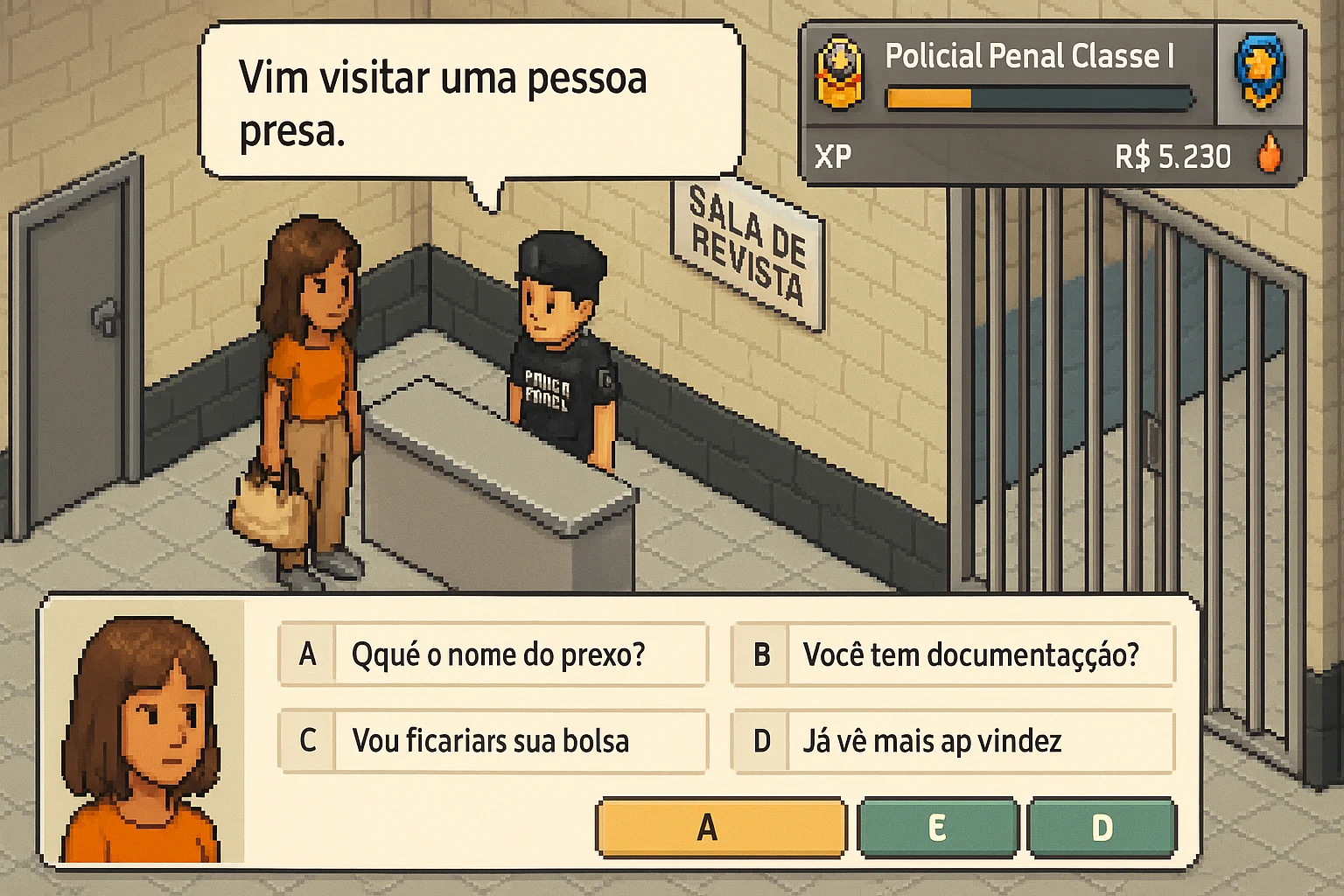
A beginner cannot review a pull request. They can look at a picture and say “no, the sergeant should be older”. So part of the interview was 11 mockups, one per screen, generated as images, and he approved or killed each one.
The first batch came from the wrong image model and looked it. I made Claude redo all of them with the better model, using mockup 01 as the style reference so the set stayed consistent. Later, the build had to match the mockups, and a browser agent proved it by screenshotting the real game against each one.
Step 5. Turn it into one prompt, with a budget
This is where the 40 minutes end. Everything so far lived in a chat, and a chat forgets. So I ran my build-a-goal skill, which turns the whole conversation into one plan file with numbered success criteria, plus a short trigger prompt that points at the plan. The plan came out at 426 lines and 22 criteria. The trigger was 3,182 characters, under the 4,000 limit for a /goal.
Three guards went in before any code:
- A money cap: $60 for any AI calls the game itself makes. It used $2.34.
- Hands off my other databases: the Cloudflare account already had other projects, so their state was fingerprinted before the run and proven untouched after it.
- Criteria you can check, not vibes: “every scene’s answer matches the official answer key” is testable. “The game is fun” is not.
C3  Every scene's correct letter equals the official answer key letter
    for that exam and question number. Validator exits non-zero on any
    mismatch.
C7  A wrong answer shows the right letter, the article of law and the
    exam source. The card closes only on click.
C14 A new exam PDF imported by the player is parsed, turned into scenes,
    and checked against its own answer key before it becomes playable.
Phase 2, 5 hours: one prompt. I pasted the goal and pressed enter. Steps 6 to 9 ran on their own.
Step 6. Ground truth first, AI second
This is the step that makes it safe to hand to a beginner. Before any AI rewrote a question, a plain parser read the official answer keys straight out of the exam PDFs: 57 answers for this force’s 2022 exam, 57 for its 2017 exam, and 118, 115 and 80 for three prison police exams from other states and the federal system. No AI touched those numbers.
Then six agents worked in parallel, each rewriting a stack of exam questions as prison scenes. Here is a real one, question 53 from the 2022 exam:
“The guys in block B banged the bars and burned a mattress to force out the warden. The ringleader is Jailson, cell 14.”
Then the sergeant asks what punishment the director can give without a judge. The answer is C. After the rewrite, a validator compares every scene’s answer letter to the parsed key. A mismatch fails the build. No exceptions, no “close enough”.
The exam board also loves true or false items. The game bundles five of them from the same topic into one A to E question (“which one is wrong?”), so the board’s trick survives inside the multiple choice format.
Step 7. Let auditors do the review the beginner cannot
My brother cannot read code. Neither can most people you would build this for. So after every iteration, the goal launched five review agents with different jobs: one checking correctness, one attacking the game like a cheater, one playing it like a student, one hunting for gaps in the plan, and one searching the web to fact-check anything that depends on the outside world. Five rounds, 42 agent calls.
The money exploit took three rounds to close. Each fix got attacked again by the next round’s adversarial agent, until the server itself issued the shift IDs and the database refused duplicates. One review pass would have declared victory after round one.
The law moved under the game
This one is my favorite, and it is why the web search agent exists. The exams are from 2017 and 2022. The country passed new laws in 2026, and a supreme court ruling on marijuana landed too. So some official answers that were right in 2022 are wrong today.
Official key, 2022 exam
Correct when the exam was printed.
After the 2026 laws
Two new laws, a supreme court ruling and a state amendment changed the answer.
Think about that for a student. He would have studied an answer the real exam will mark wrong, with an official source printed under it telling him it was right.
Step 8. Play it like the user would
Tests passing is not the same as the game working. So a browser agent played it end to end in my Chrome: logged in, did full shifts of 10 scenes, got answers wrong on purpose, fast-forwarded the review clock through day 1, 3, 7 and 15, imported a fresh exam PDF (30 of 30 answers matched the official key), and screwed up enough shifts to get dragged in front of the disciplinary board.
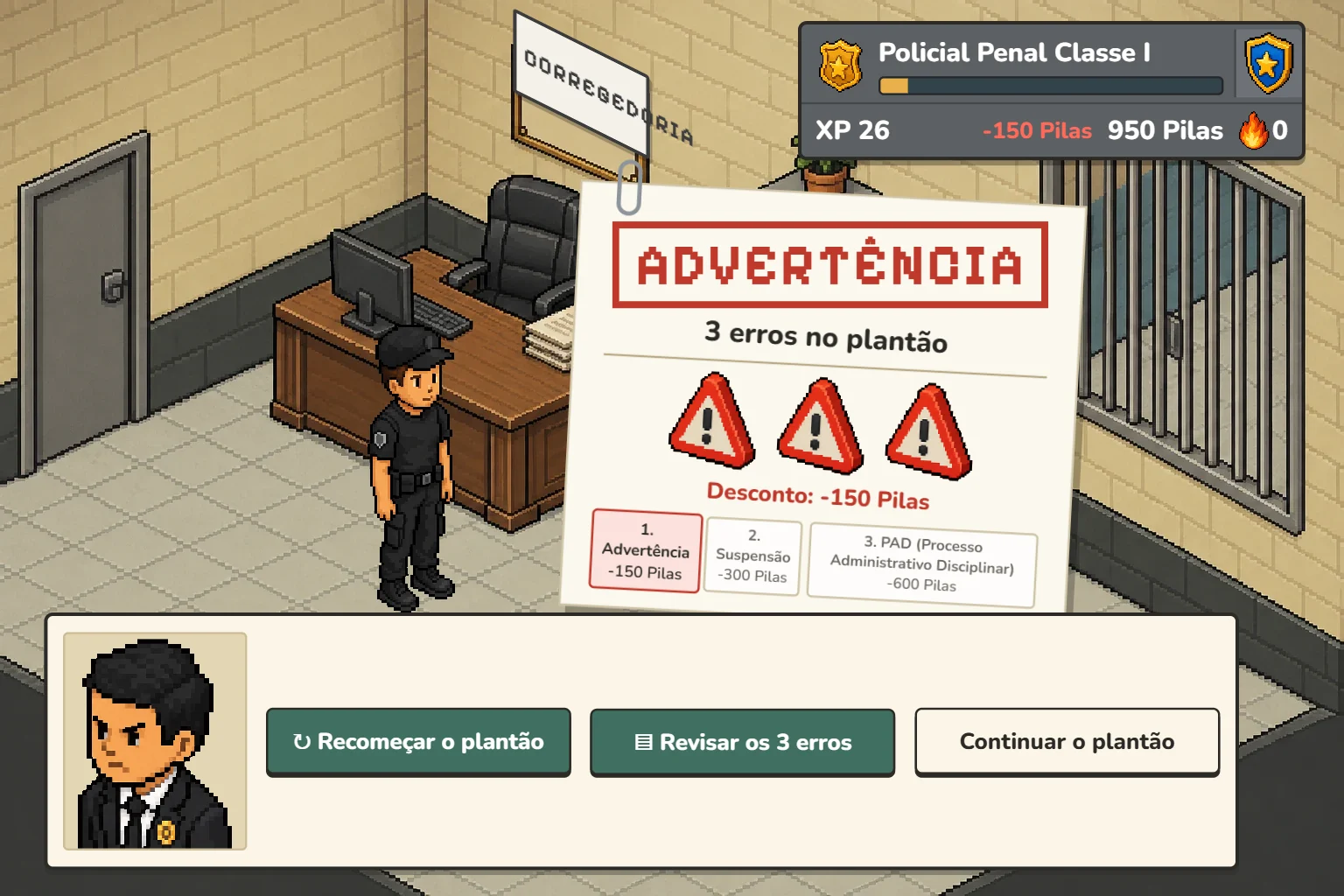
The tutorial line he ended up with sums the design up better than I can: “It never stops you from playing. It is only accounting humiliation.”
Step 9. Make it roast its own work
At the end I asked Claude for a brutal critique of what it had shipped. Do this every single time, because the list you get back is the next version.
It is right on all three. The phone point is the one that stings, because it is the most obvious thing in the world and a room full of auditors missed it. A study game that only works on a desktop gets played at a desk, and that is not where anyone wants to study.
The second line is subtler. The official answer keys are checked by plain code, but the explanations under each answer and the new questions it generated were written by the same model that checks them. The fix I want for version two is a second, different model that grades the first one, plus my brother flagging anything that smells wrong, which the game already lets him do with a contest button on the answer card.
The third line is the honest one. The Claude Code sessions cost more than the $2.34 the game spends. That is fine for a one-off, and it is exactly why the interview matters: every minute spent on the first prompt saves an hour of expensive back and forth later.
Before closing, I also ran my safe-to-close skill so nothing was left dangling on disk. A week later the same loop built me a video editor from a tutorial I never studied: make Claude Code watch tutorials for you.
What you get
By the end: 239 playable scenes from 54 real exam PDFs, 19 pieces of pixel art, 20 commits, a stack of React, PixiJS and Cloudflare with Claude Sonnet 5 playing the sergeant, a password-gated site, and an 11-slide tutorial narrated by Sergeant Marcos himself. It closed at iteration 6 of a possible 10.
And my brother got a study tool built around how he actually studies, including the parts he hates, because he said out loud what he hated and somebody wrote it down.
Hand it to Claude Code
Swap in your own exam and your own person. Paste this into Claude Code, then paste the rant under it:
I want to build a browser study game for [PERSON], who is preparing for
[EXAM]. They are not a developer. Below is them describing how they study,
dictated, full of errors. Read it for intent.

Work in this order and stop for my approval between stages:
1. Tell me honestly whether this is worth building, then research
   existing products, the official exam notice, the past exams and the
   question count per subject. Save everything to /research.
2. Ask them up to 15 questions. Record every answer word for word.
3. Generate one mockup image per screen. They approve pictures, not code.
4. Write a plan with numbered, testable success criteria and a spend cap
   for any AI the game itself calls. Fingerprint anything in my accounts
   you must not touch.
5. Parse the official answer keys with plain code, no AI. Then rewrite
   each question as a scene, and fail the build if any scene's answer
   differs from the key.
6. After every iteration run five reviewers: correctness, adversarial,
   one playing as the student, one hunting gaps, and one searching the
   web for law or rule changes since each exam was printed.
7. Play the whole thing in my browser, compare it to the mockups, then
   give me a brutal critique of what you shipped.
When not to do this
If the person already studies well and is only looking for something shiny, the game is a distraction wearing a costume. Claude’s first answer was right about that risk.
If you cannot get an official answer key, do not build it. Without a source the AI did not write, you have no way to stop it from teaching confident nonsense, and a study tool that teaches wrong answers is actively harmful.
And if the exam is next month, study. Six hours building is six hours not studying.
Same method, different stakes: research first, a source of truth the AI cannot edit, auditors on every iteration. I usually point it at Meta ads and revenue instead of prison law.
See how I workCan a beginner use Claude Code without coding?
Yes, if the beginner does the part only they can do. My brother had never used Claude Code, never typed a command, and I held the keyboard. His rant, his answers to the interview and his approvals on 11 mockups decided the product. Claude and my skills did the engineering.
How long did it take from idea to a working game?
Two phases. 40 minutes of interview, research and mockups to write the first prompt. Then that one prompt, a /goal, ran for about 5 hours on its own: six iterations, five audit rounds, 20 commits. After that came a short cleanup with a tutorial, a progress reset and the domain.
How much did it cost?
The game’s own AI calls cost $2.34, against a $60 cap set before the build started. That covers the pixel art and the sergeant’s chat. The Claude Code sessions that built it cost more, which is fair: the self-critique pointed out that the process cost more than the product.
How do you stop the AI from teaching wrong answers?
By never letting it be the source of truth. Official answer keys were parsed from the exam PDFs with plain code, and every generated scene is checked against them. A web search auditor then flags any answer a newer law has changed. That caught eight scenes that were right in 2022 and wrong today.
Can I use this for a different exam or subject?
Yes. Nothing here is specific to prison law except the art and the characters. You need past exams with official answer keys and a person willing to tell you what bores them. Use the prompt in the Hand it to Claude Code section and swap in your exam and your person.